

CMSI China Maritime Reports
Files
Download Full Text (1.6 MB)
Description
Main Findings
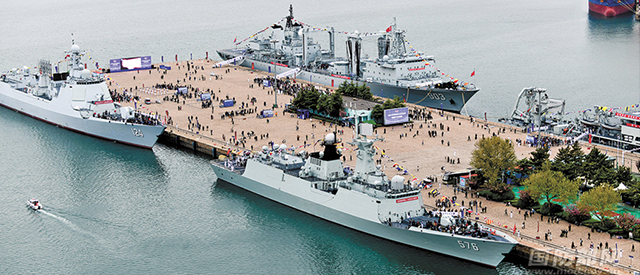
- Xi Jinping has played a critical role in the Chinese Navy’s rapid transformation into a large, technologically advanced sea service capable of conducting an expanding catalog of maritime operations, from the littorals of the People’s Republic of China (PRC) to the Atlantic Ocean.
- Since assuming power in November 2012, Xi Jinping has participated in at least 15 engagements with the People’s Liberation Army Navy (PLAN). He has inspected multiple PLAN units, including the Navy’s two nuclear submarine units; attended the commissioning of new naval vessels; visited the PLAN headquarters; and presided over two major fleet reviews.
- In 2014, Xi oversaw the update to the PRC’s military strategy, which placed unprecedented emphasis on maritime operations in defense of Beijing’s territorial claims (especially Taiwan) and protection of China’s growing overseas interests. This paved the way for enormous investments in new naval platforms and increased the PRC’s naval presence around the world.
- From 2015 to 2017, Xi led a sweeping military reform and reorganization campaign. The first phase, which sought to optimize the PLA’s command structure, raised the status of the PLAN and allowed naval officers to hold key positions in the PLA’s three coastal Theater Commands. The second phase strived to streamline the structure of the PLA’s operational forces, and it resulted in the large-scale transfer of personnel from the PLA Army to the PLAN.
- Xi has played a direct role in the formulation of PRC naval strategy and policy. He personally decided to prioritize the construction of nuclear-powered ballistic missile submarines, to build a carrier-centric navy, to establish China’s first overseas military base, and to expand the size of the PLAN Marine Corps (PLANMC).
- Xi’s efforts to build a powerful navy are predicated on a strong, personal belief in the vital importance of maritime power for China’s national “rejuvenation.” In his words, “Strong countries are strong at sea, while weak countries are weak at sea.” Xi’s interest in maritime affairs predates his rise to leadership over the Party, state, and military.
- Early in his tenure as paramount leader, Xi Jinping signaled his intention to reorient the PLA for maritime operations, declaring, “Threats to national security are mainly at sea, the focus of military struggle is mostly at sea, and the center of gravity of the nation’s expanding national interests is at sea.” PLAN leaders commonly refer to this judgement as Xi Jinping’s “three at seas” (三个在海上).
- While continuing to frame China’s maritime dispute strategy as a balancing act between assertiveness (维权) and stability (维稳), Xi seems to believe that China was too conciliatory towards other claimants during the tenure of his predecessor, Hu Jintao. In a July 2013 speech, he called for China to shift the balance in favor of greater assertiveness. PLAN sources show that Xi played an active role in China’s construction of massive military bases on disputed features in the South China Sea.
Publication Date
June 2, 2026
Publisher
China Maritime Studies Institute, U.S Naval War College
City
Newport, Rhode Island
Keywords
China, PRC, China Maritime Studies Institute, CMSI, People’s Liberation Army, PLAN, PLAN Navy, Chairman Xi, Xi Jinping
Recommended Citation
Martinson, Ryan D., "China Maritime Report #54: Chairman Xi's Navy" (2026). CMSI China Maritime Reports. 54.
https://digital-commons.usnwc.edu/cmsi-maritime-reports/54
Accessibility Request
Some items in this repository were created or digitized prior to implementation of the accessibility standards under the Rehabilitation Act of 1973 and are preserved in their original, unmodified state for research, reference, or historical recordkeeping. In accordance with the ADA Title II Final Rule, the College provides accessible versions of archival materials upon request. To request a version of a file or resource, please submit an Accessible File Request Form.


