


CMSI China Maritime Reports
Files
Download Full Text (1.7 MB)
Description
Main Findings:
- The Navy Party Standing Committee (NPSC) is the Chinese Navy’s core leadership body, but it does not operate independently; it functions within the broader Chinese Communist Party (CCP) and PRC military hierarchy.
- Politically, the NPSC ensures that China’s Navy remains loyal to the CCP with Xi Jinping at its core. Administratively, it ultimately directs personnel, training, procurement, logistics, fiscal management, readiness, and modernization.
- Military reforms have preserved the NPSC’s authoritative role within the Navy, and today’s members have gained more diverse operational experience earlier in their careers than their predecessors.
- At the same time, members’ shorter average tenures and the Navy’s loss of direct representation on the CMC appear to have reduced the political influence of both the NPSC and its members within the broader Party-military system.
- Future committee members will likely bring greater joint, overseas, and strategic experience while continuing to confront the inherent challenge of developing a technologically advanced, globally active PLAN that remains a politically reliable instrument loyal to the Party.
Publication Date
August 6, 2026
Publisher
China Maritime Studies Institute, U.S Naval War College
City
Newport, Rhode Island
Keywords
China, PRC, China Maritime Studies Institute, CMSI, People’s Liberation Army, PLAN, PLAN Navy, Navy Party Standing Committee, NPSC, CCP Party Committees
Recommended Citation
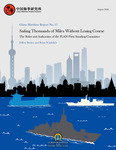
Becker, Jeffrey and Waidelich, Brian, "China Maritime Report #57: Sailing Thousands of Miles Without Losing Course: The Roles and Authorities of the PLAN Party Standing Committee" (2026). CMSI China Maritime Reports. 57.
https://digital-commons.usnwc.edu/cmsi-maritime-reports/57
Accessibility Request
Some items in this repository were created or digitized prior to implementation of the accessibility standards under the Rehabilitation Act of 1973 and are preserved in their original, unmodified state for research, reference, or historical recordkeeping. In accordance with the ADA Title II Final Rule, the College provides accessible versions of archival materials upon request. To request a version of a file or resource, please submit an Accessible File Request Form.


